
SBN+O (South Boston Nautical and Oceanic Library)
Unbuilt
SBN+O (South Boston Nautical and Oceanic Library) Design Concept
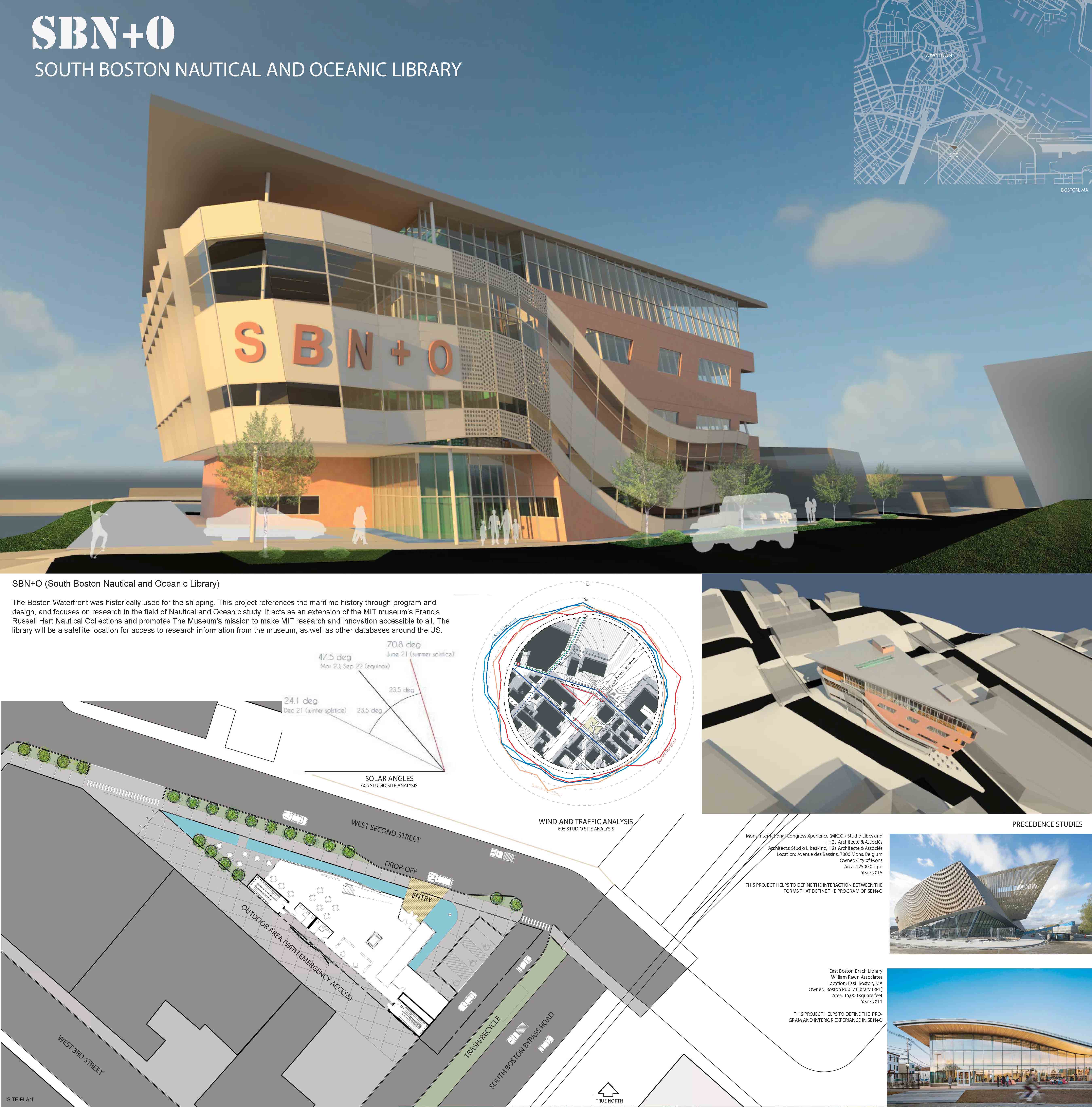
The project is located at 137 West Second Street in South Boston, Massachusetts. Artist for Humanity is located across the street. The Boston Waterfront was historically used for the shipping. This project references the maritime history through program and design, and focuses on research in the field of Nautical and Oceanic study and education. It will provide knowledge and education to children in an urban setting.
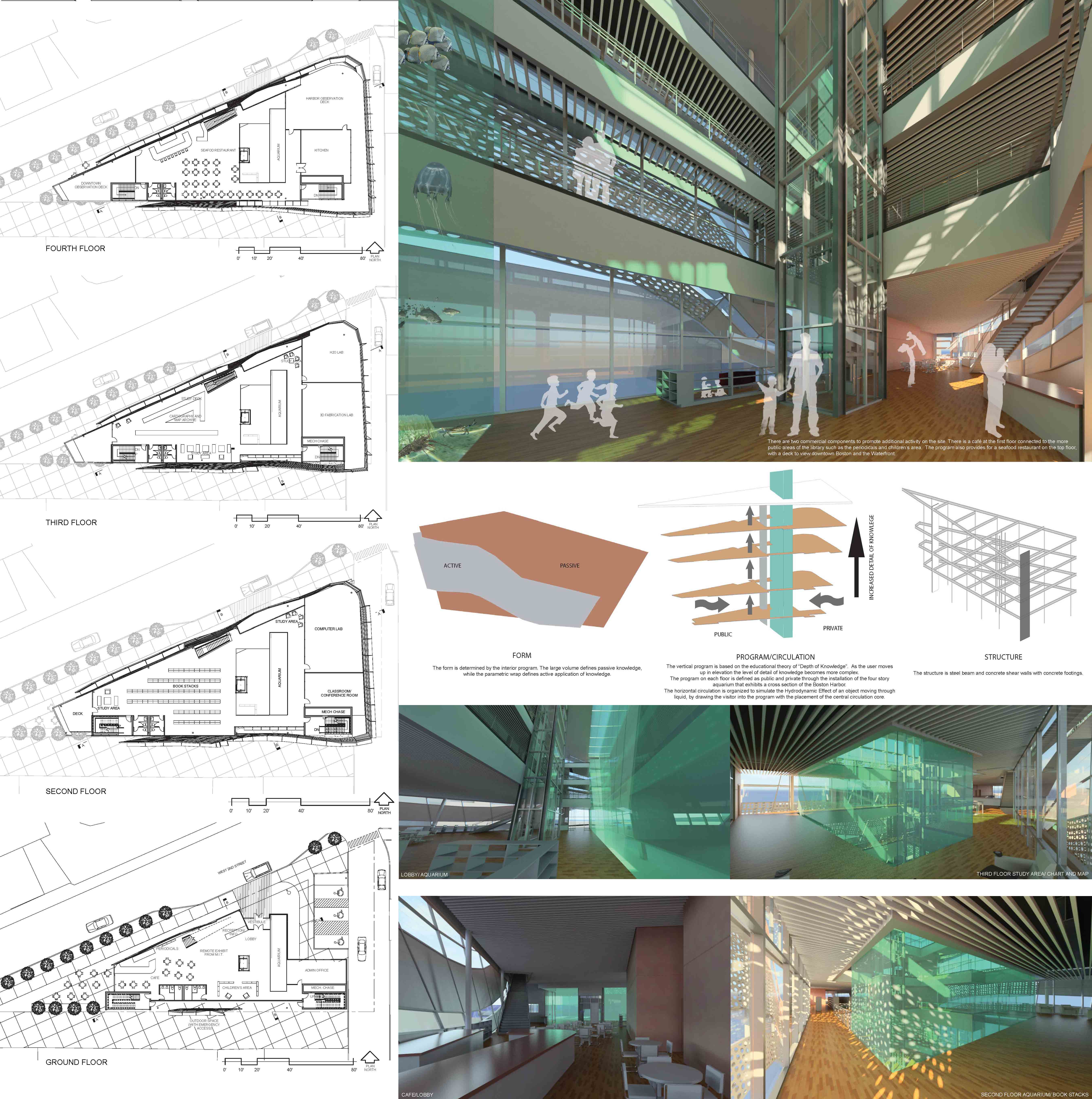
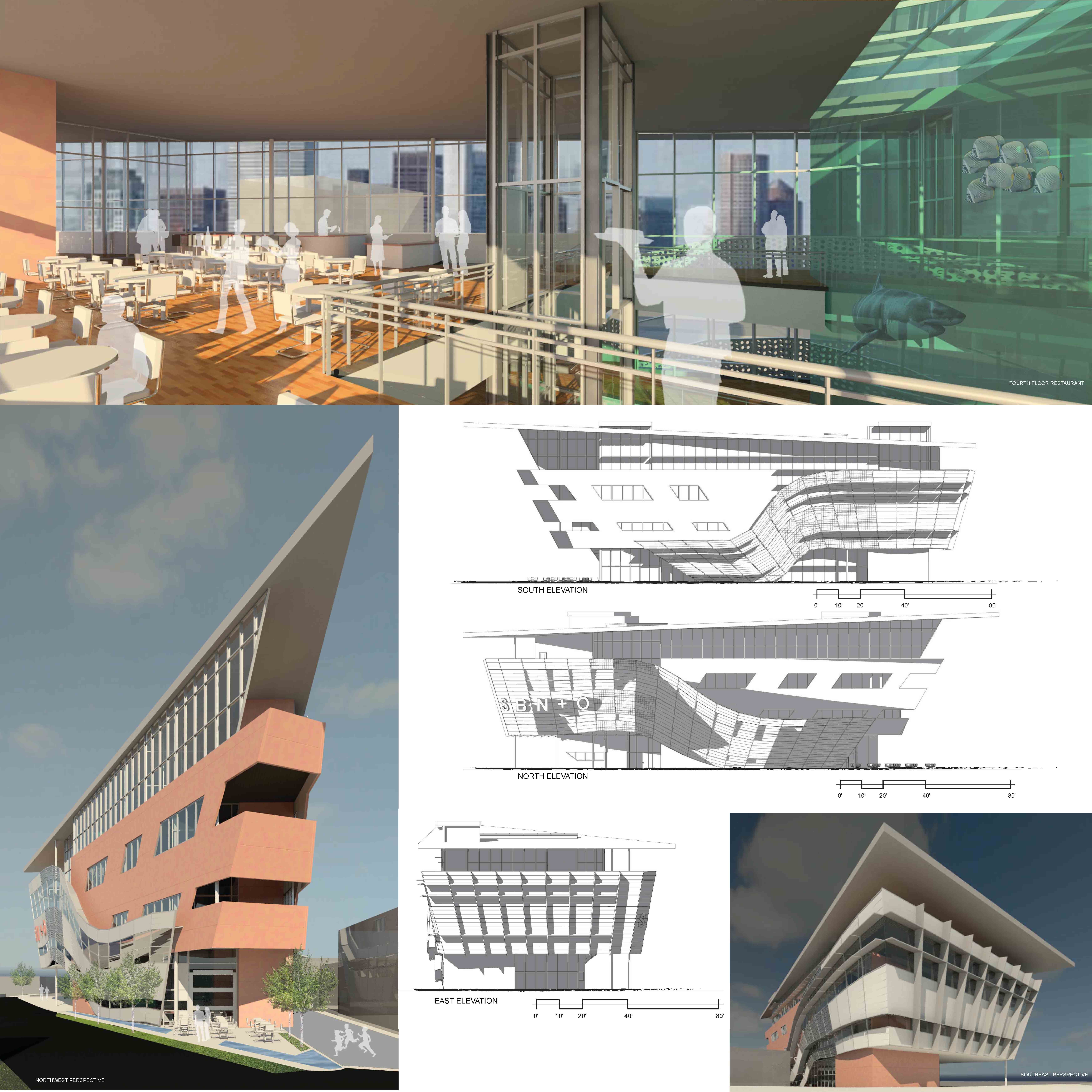
There are two commercial components to promote additional activity on the site. There is a café at the first floor connected to the more public areas of the library such as the periodicals, large computer area and children’s area. The program also provides for a seafood restaurant on the top floor, with a deck to view downtown Boston and the Waterfront.
Site analysis and Research
The site is triangular shaped, approximately 11,357 sf or .26 acres. It is easily accessible by foot, bike and automobile. The target residents are located to the east/southeast. For this reason the entrance is located at the east of the building. The climate is cold the majority of the time, so the building is heat dominated. For this reason the project utilizes passive heating strategies. During the time of warm weather, the building can utilize prevailing winds to vent and cool.
Form: The form is determined by the interior program. The large volume defines passive knowledge, while the parametric wrap defines active application of knowledge.
Program/Circulation: The vertical program is based on the educational theory of “Depth of Knowledge”. As the user moves up in elevation the level of detail of knowledge becomes more complex. The program on each floor is defined as public and private through the installation of the four story aquarium that exhibits a cross section of the Boston Harbor. The horizontal circulation is organized to simulate the Hydrodynamic Effect of an object moving through liquid, by drawing the visitor into the program with the placement of the central circulation core.
Structure: The structure is steel beam and concrete shear walls with concrete footings.
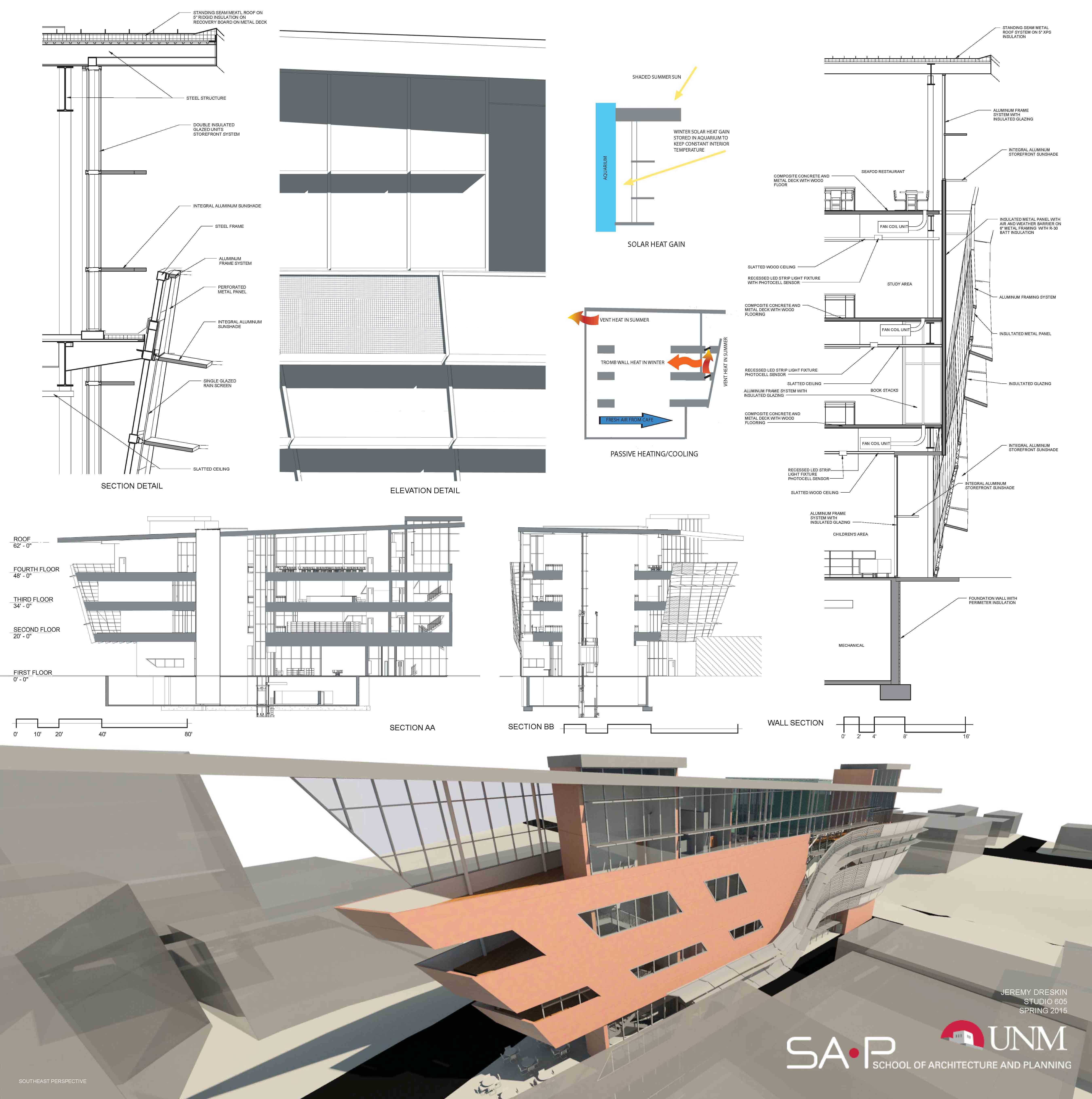
Sustainable Features: Passive solar techniques are utilized during winter to store solar heat on the aquarium to keep constant interior temperature. High insulated envelope is designed to minimize heat loss and customized shading and rain screen wrap is provided to protect from excessive heat.
 jeremydreskin.studio